
The market cap of the listed firms on the Bombay Stock Exchange and the National Stock Exchange on Monday declined by a whopping Rs 125,000 crore (Rs 1,250 billion) to Rs 43,75,020 crore (Rs 43,750 billion), thereby falling below the GDP of Rs 46,93,000 crore (Rs 46,930 billion) at current market price, as per the real economy data released by the Reserve Bank of India on April 28 this year.
The market cap of the listed firms on the Bombay Stock Exchange and the National Stock Exchange on Monday declined by a whopping Rs 125,000 crore (Rs 1250 billion) to Rs 43,75,020 crore (Rs 43750.20 billion), thereby falling below the GDP of Rs 46,93,000 crore (Rs 46930 billion) at current market price, as per the real economy data released by the Reserve Bank of India on April 28 this year.
We analyse the fourth quarter results of companies and find out what impact they had on their stocks. Also, an update on the fortunes of our previously recommended stock picks

Among the Sensex firms, Larsen & Toubro, Axis Bank, Tata Steel, Bajaj Finance, Power Grid, Asian Paints, Mahindra & Mahindra and Bajaj Finserv were the biggest gainers. State Bank of India, Hindustan Unilever, Tata Motors and Titan were the laggards.

'Investors need to be stock specific and should not rush to buy stocks at the current levels.'

From the enactment of the capital control Act to the recognition of the BSE as a stock exchange and the infamous Harshad Mehta scam, here are the 18 biggest events for stock markets from 1947 to 1993.

The overseas market has developed into a significant competitor for India's two biggest markets -- rupee and stocks, the pre-Budget Economic Survey 2013-14 said, adding that ten years ago, the global market was practically absent in both these fields.

Stocks of public sector undertakings (PSUs) have been on fire in the past year as investors cheered an improvement in key operating metrics and embraced counters of these state-owned enterprises, analysts suggest. The S&P BSE PSU Index has gained over 90 per cent in the past year, rising much higher than the S&P BSE Sensex, which has rose nearly 19 per cent during this period, according to ACE Equity data. The BSE PSU Index, reports show, has delivered a compound annual growth rate (CAGR) of 28 per cent (including dividends reinvestments) over five years and risen by almost 60 per cent in the past year.

The NSE held 25 to 100 per cent stakes in these entities through its subsidiary NSE Investments as of September.

It was alleged in an audit that Subramanian was the Yogi, but Sebi dismissed that claim in its final report on February 11.

From March 3, investors in India will be able to trade in select US stocks through the NSE International Exchange (NSE IFSC), a wholly owned subsidiary of the National Stock Exchange (NSE). Investors can invest in NSE IFSC receipts on US stocks, which will be in the form of unsponsored depository receipts (DRs). For a start, this will include DRs of 50 US stocks such as Apple, Alphabet, Amazon, Tesla, Microsoft, Morgan Stanley, Nike, P&G, Coca-Cola, and Exxon Mobil. Indian retail investors will be able to transact on the NSE IFSC platform under the Liberalised Remittance Scheme (LRS) limits prescribed by the Reserve Bank of India (RBI), which currently stand at $250,000 per year.
Cairn India has drawn strength from its Scottish parent, but also built new systems and processes to support its role in the country's oil sector.
NSE Indices Ltd, an arm of the National Stock Exchange (NSE), on Tuesday launched the country's first-ever Real Estate Investment Trusts and Infrastructure Investment Trusts index -- Nifty REITs and InvITs Index. The index aims to track the performance of REITs and InvITs that are publicly listed and traded on the NSE, the exchange said in a statement. A real estate investment trust (REIT) or an infrastructure investment trust (InvIT) is an investment vehicle that owns revenue-generating real estate or infrastructure assets.

Investors should view any bounce-back in bank stocks as an opportunity to exit the pack, analysts suggested, as the worst may not be over yet. The recent quarterly results of HDFC Bank and Axis Bank disappointed the Street, triggering a marketwide selloff by foreign institutional investors, especially in banking counters. While HDFC Bank, which was the anchor for the market correction during the past week, ended 2 per cent higher amid short covering on Wednesday, Axis Bank's shares settled 3 per cent lower.

The National Stock Exchange, Bombay Stock Exchange, MCX Stock Exchange and United Stock Exchange have been invited for the August 6 meet.

Leading stock exchange NSE's board has given its approval to the Central Bureau of Investigation (CBI) to prosecute its former MD and CEO Chitra Ramkrishna in the co-location scam case, sources said on Monday. The CBI was awaiting the go-ahead of the board of National Stock Exchange of India (NSE) to prosecute Ramkrishna following her arrest in March last year. She was arrested in the co-location scam nearly four years after an FIR was registered by the agency in May 2018.

Zero-debt Cairn India has $2.85 billion cash reserve.
The National Stock Exchange (NSE) has received Rs 300 crore from the Securities and Exchange Board of India (Sebi) following relief from the Supreme Court (SC), which is hearing an appeal by the market regulator in the colocation case. The court on March 20 asked Sebi to return Rs 300 crore to the NSE from the Rs 1,107 crore the exchange had deposited as part of the disgorgement in the case. The NSE had given an undertaking that it will return the entire amount to Sebi if the latter wins its appeal before the SC.

Passive funds tracking the National Stock Exchange Nifty Next 50 Index have seen their assets under management (AUM) more than double in the past year. The index's growing popularity can be attributed to its robust 50 per cent return over the same period. Currently, the AUM of funds tracking the Nifty Next 50 index stands at nearly Rs 30,000 crore.

Among Sensex firms, Maruti zoomed the most by 8.94 per cent. Bajaj Finance rallied over 5 per cent, UltraTech Cement by 3.71 per cent, and Bajaj Finserv by 3.7 per cent. Mahindra & Mahindra, Hindustan Unilever and Trent were also among the gainers. However, ITC was the biggest loser, dropping by 1.26 per cent. Eternal, Tech Mahindra and Larsen & Toubro also declined.

At least six major UK universities have announced plans to set up campuses or liaison offices in India.

The National Stock Exchange of India (NSE), which is still awaiting regulatory approval for its initial public offering (IPO), is now planning to streamline the process of buying the unlisted stocks of the company, thereby reducing the time taken for such deals from about four months to just a week. The management of India's biggest stock exchange has affirmed that it is working to reduce the time taken. According to the analysts, certain approvals required at present from NSE for buying stocks, are adding to the processing time.

Automotive (auto) and auto ancillary stocks have been in the fast lane thus far in 2023-24 (FY24), with the National Stock Exchange Nifty Auto Index surging nearly 27 per cent, outperforming the Nifty50, which has gained roughly 11 per cent during this period. The top-gear performance of auto stocks at the bourses, according to A K Prabhakar, head of research at IDBI Capital, has been triggered by the premiumisation of products across vehicle manufacturers, which has seen vehicle sales remaining relatively stable. "It is not about higher sales figures now, but about premiumisation.

The Securities and Exchange Board of India (Sebi) is likely to notify soon stricter derivatives trading norms aimed at curbing speculative trading activity and curtailing losses of over Rs 50,000 crore incurred by retail investors every year. Based on the feedback received from industry participants, seven measures proposed by the market regulator in a consultation paper in July may be implemented with minor tweaks ahead of its forthcoming board meeting, said sources.

Against the backdrop of a nearly four-hour outage at the National Stock Exchange last month, an RBI article on Friday suggested allowing trading of benchmarks Nifty and Sensex on all stock exchanges. Trading was halted at the NSE for nearly four hours on February 24, reportedly due to telecom links failure leading to unavailability of the online risk management system of the NSE Clearing Ltd (NCL). NCL, a wholly-owned subsidiary of NSE, is responsible for clearing and settlement of all trades executed on the exchange, according to the article.
Among Sensex firms, Tata Motors rose the most by 3.5 per cent while Adani Ports gained 3.16 per cent. Reliance Industries rose by 2.82 per cent. Eternal, Tech Mahindra, Kotak Mahindra Bank, Hindustan Unilever and Maruti were also among the gainers. However, Bajaj Finserv, Power Grid, Mahindra & Mahindra and HCL Tech were among the laggards.

Capital markets are becoming more prominent in India's growth story, with an expanding share in capital formation and investment landscape on the back of technology, innovation and digitisation, according to the Economic Survey 2023-24 tabled in Parliament on Monday. Further, Indian markets are resilient to global geo-political and economic shocks, it added. "Despite heightened geo-political risks, rising interest rates and volatile commodity prices, Indian capital markets have been one of the best performing among emerging markets in FY24," the Economic Survey said.

In a big boost to tycoon Gautam Adani, markets regulator Sebi on Thursday cleared the billionaire and his group of stock manipulation allegations made by US short-seller Hindenburg Research, saying fund transfer between group companies did not fall foul of any regulation.

After pumping in close to $20 billion in the preceding five months, foreign portfolio investors (FPIs) have yanked out $220 million from domestic stocks this month. The selling by overseas funds has led to turbulence in the domestic markets, with benchmark indices swinging wildly recently.
New-age tech tools and 'mystery shoppers' are helping the country's top bourse stay ahead of the curve against dabba trading platforms and entities dolling out unsolicited investment tips. In the past one month, the National Stock Exchange (NSE) has issued close to two dozen warnings and advisories against such activities. "We saw a rise of dabba trading or illegal trading platforms after the pandemic.

This is the case even though the benchmark index is only 5 per cent below its all-time high. The list of stocks trading at a discount primarily consists companies in the automotive, banking, oil and gas, insurance, healthcare, and metal sectors.
Financial programmes backed by institutions are highly focused and intensive in nature unlike a general management programmes, where the key aim is holistic development.
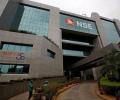
The National Stock Exchange (NSE) has made a fresh attempt at settling a regulatory investigation into the misuse of Trading Access Point (TAP) software at the bourse. The Securities and Exchange Board of India (Sebi) rejected a similar application in 2022. "NSE and its employees have filed a consolidated settlement application dated May 4, 2023, with Sebi.

National Stock Exchange (NSE) chief Ashishkumar Chauhan on Friday cautioned retail investors against trading in derivatives and suggested them to invest in equities through mutual fund route. He emphasized that trading in Futures & Options (F&O) derivatives should be limited to informed investors who can manage risk and comprehend the market. Recently, Finance Minister Nirmala Sitharaman and chief economic advisor V Anantha Nageswaran flagged the growing risk of F&O trading for retail investors.

The funding environment in India for startups is improving this year if one were to go by Bain & Company estimates. Five private equity (PE) investors that come on top on the criterion of deal size collectively put in $9 billion in the first half of 2024, surpassing their outlay for last calendar year, when it was $8 billion. At the top of the list is Swedish firm EQT, which acquired US-based and listed Perficient at an enterprise value of $3 billion, the deal being done by the Indian wing of the company. It has also added to its list by putting in $500 million in WSO2, a "software as a service" company, increasing its tally to $3.5 billion.

India's first-ever listed new-age company, Zomato, has seen a meteoric rise in its stock price in calendar year 2023 (CY23), rising 70.75 per cent during this period as compared to 9.5 per cent rise in the S&P BSE Sensex. From being the second worst hit new-age stock in CY22, crashing 57 per cent on the National Stock Exchange (NSE), the stock hit the Rs 100-mark for the first time since January 2022 in late August. The stellar run in the stock - only after PB Fintech and One97 Communications-owned Paytm, analysts say, may be coming to an end, at least for now.

Airtel said the amount will be used for refinancing its existing loan portfolio.

Tata Steel, Maruti, Tata Motors, Infosys, Bharti Airtel and Tech Mahindra were also among the laggards. However, Trent, Asian Paints, Hindustan Unilever, ITC, Kotak Mahindra Bank, and Reliance Industries were the gainers.

Small and midcaps are leading the charge in the latest market rebound. Since November 21, when the benchmark S&P BSE Sensex and the National Stock Exchange Nifty hit their recent lows and slipped into correction territory, the Nifty Smallcap 100 index has risen by 8 per cent, while the Nifty Midcap 100 has gained 5.7 per cent. Meanwhile, the Nifty 50 index has risen by 4.7 per cent during this period.

Some unions have opposed EPFO investing in share markets.
